
Private Prayer Apps Compared: How to Choose for Sensitive Prayer Requests
Compare private prayer apps by data comfort, note sensitivity, retrieval control, and long-term personal follow-through.
For people carrying heavy personal concerns, privacy is not a “nice to have.” It is the deciding factor.
This private prayer apps compared guide focuses on trust, clarity, and practical daily use.
Privacy-first comparison table
| App | Privacy confidence style | Best for | Watch-out | |---|---|---|---| | PrayerNotes (paid) | Personal structured journaling context | Sensitive private requests | Paid app | | PrayerMate | Personal list management + optional PIN | Simple daily intercession | Less depth for long reflection notes | | Echo Prayer | Configurable sharing for groups | Team prayer collaboration | Must manage sharing expectations carefully |
PrayerNotes for private journaling depth (paid)
PrayerNotes is paid and typically chosen when users want a dedicated private prayer journal system with clear retrieval and review.


PrayerMate for straightforward personal privacy
PrayerMate can be a solid choice if you want a lightweight personal system and minimal complexity.
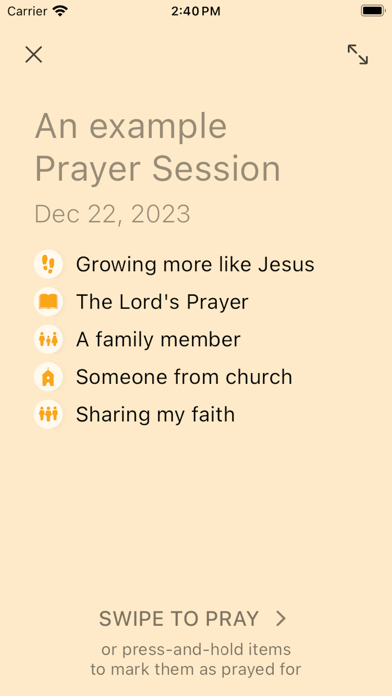
Echo Prayer for privacy inside shared contexts
Echo Prayer is built for connection. That can be a strength, but only if your group sharing norms are explicit.

Privacy decision checklist
- Decide what content must stay strictly personal.
- Confirm who can see shared requests (if any).
- Test retrieval speed for urgent prayer moments.
- Review your notes policy monthly.
Related reads: [prayer app privacy](/blog/prayer-app-privacy), [private prayer journal app](/blog/private-prayer-journal-app), and [prayer apps for small groups](/blog/prayer-apps-for-small-groups).
FAQ
Is PrayerNotes free?
No. PrayerNotes is paid.
Is a group app always less private?
Not always, but it requires stronger sharing discipline.
What matters most in private prayer apps?
Clear control over visibility, fast retrieval, and consistent personal follow-through.